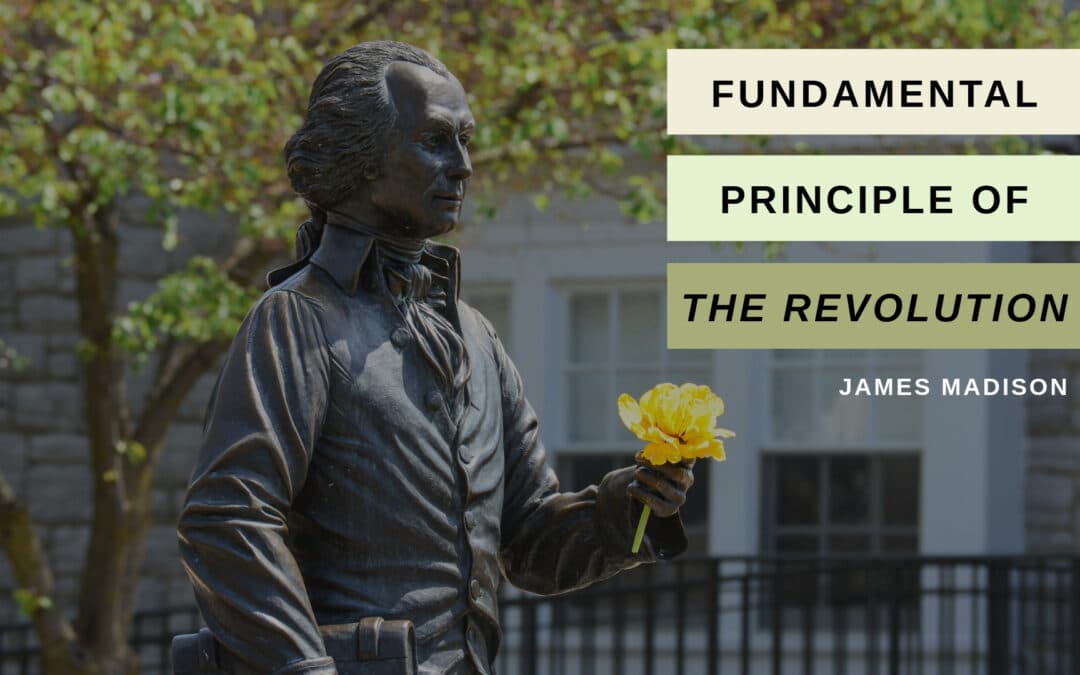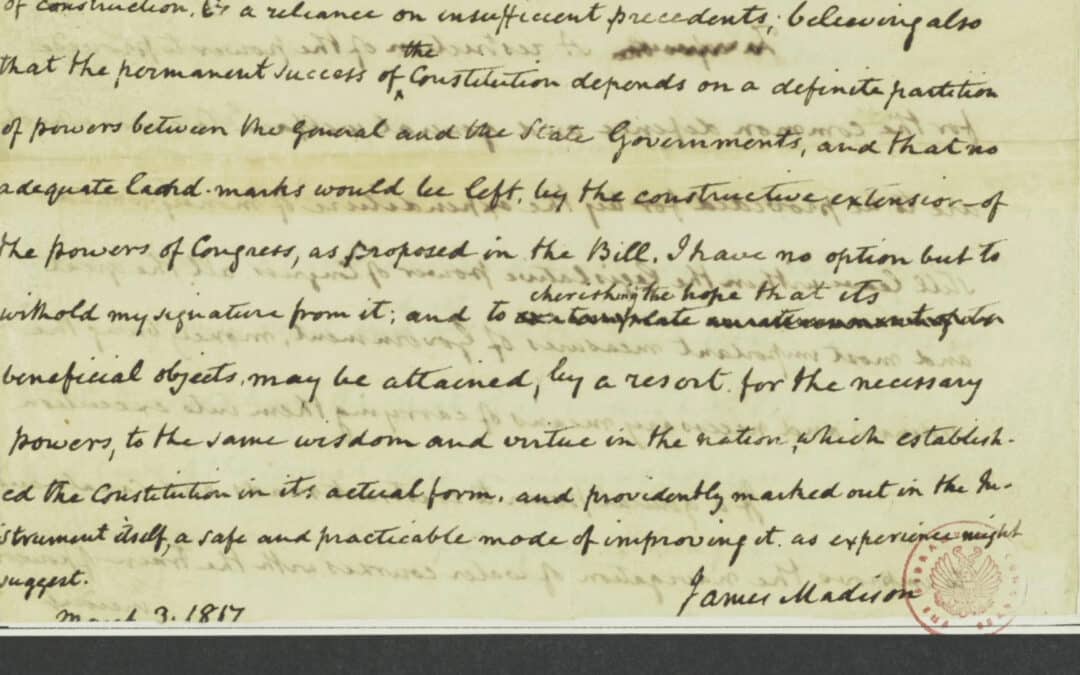
James Madison
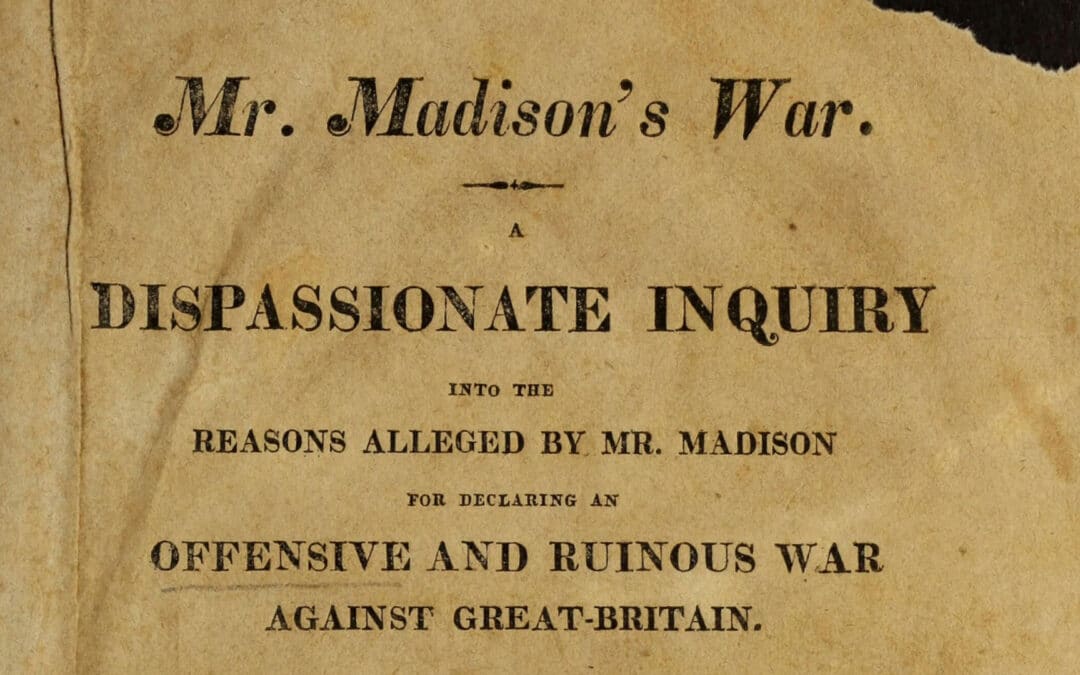
The War of 1812 and State Sovereignty: New England’s Militia Resistance Explained
Was the militia intended to be used as an offensive military force in foreign lands? During the War of 1812, New England states not only said no, but they used the principles of the 10th Amendment to actively interpose and resist federal demands for mobilizing the...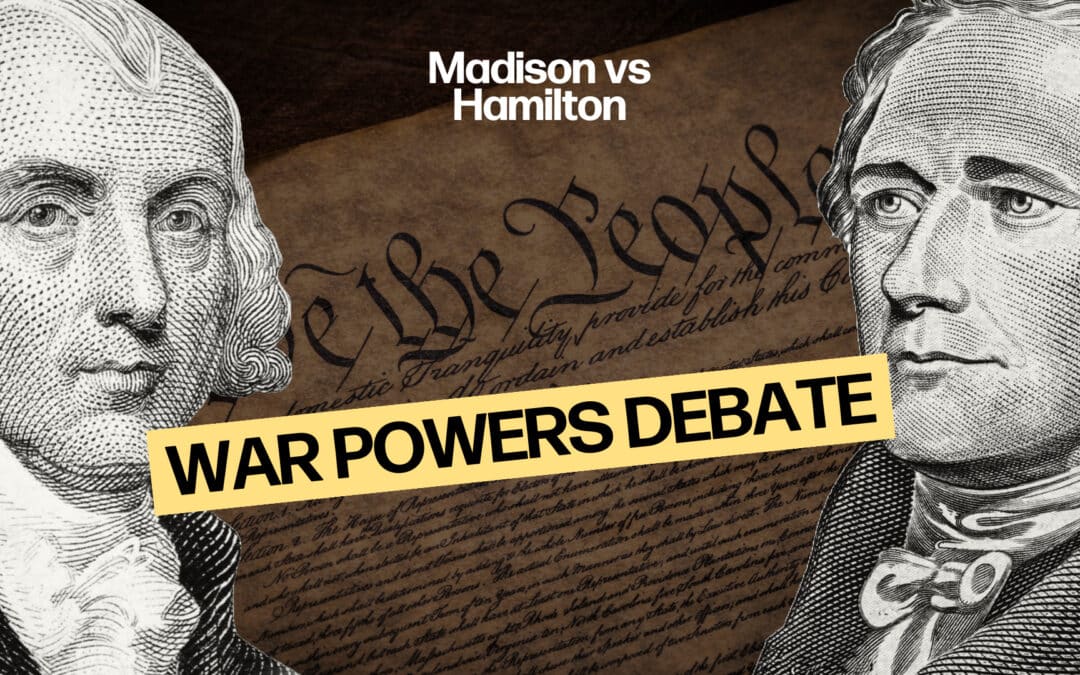
Little Known Episode in U.S. History Explains Executive War Powers
Within five years of the publishing of The Federalist papers (and four years of the ratification by the states of the Constitution), the co-authors of those seminal and influential essays on American political theory and constitutional interpretation were back at...
Principles of ’98: Rooted in the American Revolution
In response to the hated Alien and Sedition Acts, Thomas Jefferson and James Madison drafted the Kentucky and Virginia Resolutions of 1798, sometimes referred to as the “Principles of ‘98.” But the principles behind them were nothing new – they were part of a...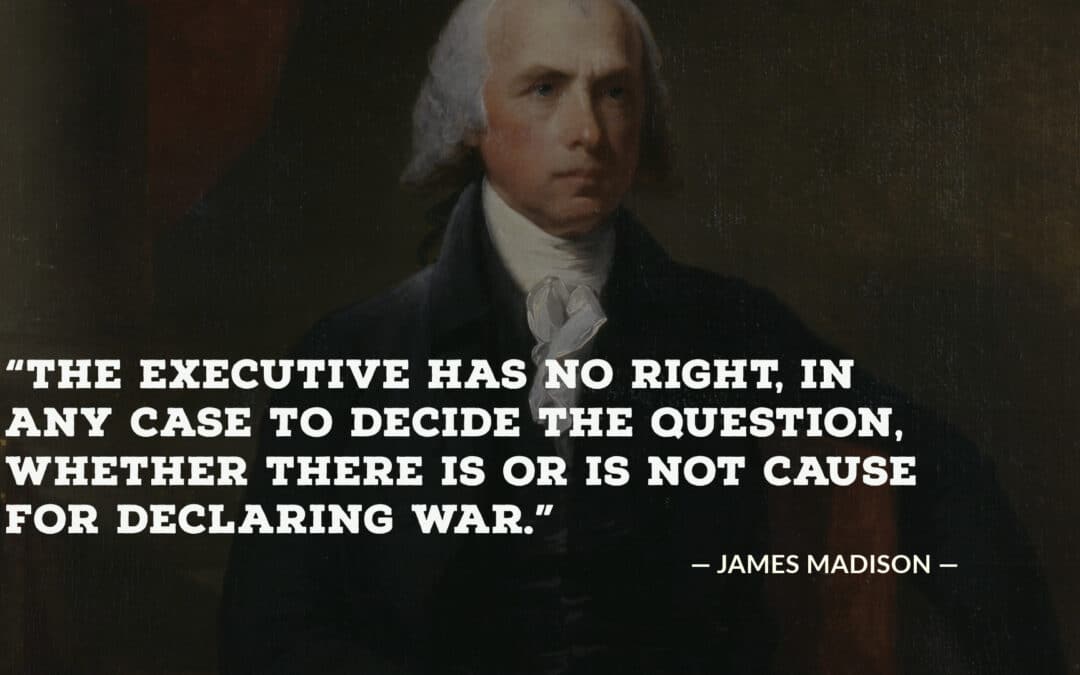
War Powers: The True History of James Madison, the Constitution and the War of 1812
In the early years of the United States under the Constitution, James Madison made one of the most compelling constitutional arguments against unilateral presidential war powers. Through their actions, the first three presidential administrations of Washington, Adams,...