
“It doesn’t apply to you.”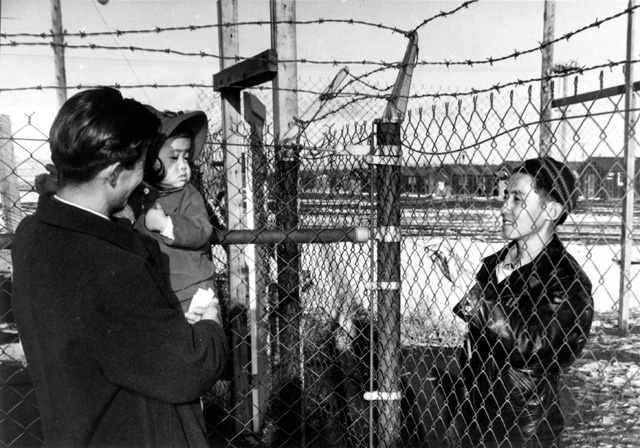
I’ve heard that a lot in regards to the detention provisions in the National Defense Authorization act. I prefer to call them kidnapping provisions. What else do you call it when armed men can come haul you off and hold you indefinitely without due process? Doing it under the auspices of some federal act doesn’t make it any less criminal, as far as I’m concerned.
But really, what difference does it make? After all, it doesn’t apply to you, right?
President Obama released a Presidential Policy Directive last week, which set forth procedures for implementing section 1022 of the NDAA. The directive makes clear he does not interpret the section to apply to “non-U.S. citizens.”
No, it doesn’t apply to you.
And your congressman – he told you the detention provisions don’t apply to you. He explained in a nicely formatted form letter how some unpatriotic Americans distorted the language in the NDAA to convince you that the feds could come along, batter down your door and drag you into the night. “Untrue!” he declares. The NDAA means to protect you from terrorists. Never fear.
It doesn’t apply to you.
That radio show talk host, she poo-pooed opposition to NDAA as well. “It doesn’t apply to you,” she said. She took a whole 10 minute segment, analyzed sections 1021 and 1022 and proved definitively that the U.S. government could NEVER construe those provisions to allow for the indefinite detention of an American. An illegal alien on U.S. soil, maybe.
But it doesn’t apply to you.
And maybe they’re right. Maybe it doesn’t.
But the very fact that so much debate exists surrounding the meaning of sections 1021 and 1022 should cause you concern. Credible people – legal scholars, elected officials and former military officers – have all expressed the view that the NDAA could allow for the indefinite detention of people right here in America. Retired four-star Marine Generals Charles C. Kurcak and Joseph P. Hoar said “Due process would be a thing of the past,” and the provisions would “expand the battlefield to include the U.S.” They assert sections 1021 and 1022 also violate the spirit of post reconstruction act limitations on the use of armed forces for domestic law enforcement. Sen. Lindsey Graham said the NDAA “designates the world as the battlefield, including the homeland,” on the Senate floor during the NDAA debate.
Even if the arguments don’t convince you, you must at least acknowledge that sections 1021 and 1022 are overbroad, vague and open to interpretation. That leaves us to trust in the good judgment and stellar moral character of Barack Obama, Rick Santorum or whoever happens to hold the keys to the White House on down the road to protect our liberty.
Are you really comfortable doing that?
Even if we accept that the authority granted in the NDAA kidnapping provisions remains safely restrained, when was the last time you saw a government power that did not grow and expand? The NDAA itself represents a massive expansion of the original Authorization to Use Military Force passed after 9-11. Do you realize the AUMF only granted the president the power to “use all necessary and appropriate force against those nations, organizations, or persons he determines planned, authorized, committed, or aided the terrorist attacks that occurred on September 11, 2001, or harbored such organizations or persons?” The NDAA expands the universe of persons the president can use force against to “associated forces” (whatever those are) engaged in hostilities against the U.S. or its coalition partners (whoever they are) and those who have committed a “belligerent act” (whatever those are).
Power expands. And even if they all tell you the NDAA kidnapping provisions don’t mean kidnapping and don’t apply to you, what makes you think they won’t later, if left unchecked?
Any time you consider granting a power, you should ask yourself this question: would you be comfortable with your worst enemy wielding it?
Because one day, somebody might just apply it to you.
The NDAA is a loaded gun lying on the table, just waiting for circumstances to warrant picking it up and pointing it at your head. You may feel safe today. You may believe the soothing words of your congressman and the silky-smooth promises of the president. But what happens during the next scare? What happens when the next attack goes down and Americans once again clamor for protection? Will Uncle Sam really leave that loaded pistol lying there on the table?
On Feb 19, 1942, Pres. Franklin D. Roosevelt signed executive order 9066. The order authorized the Secretary of War and the U.S. Army to create military zones “from which any or all persons may be excluded.” The order left who might be excluded to the military’s discretion.

Become a member and support the TAC!
This led to the roundup of around 110,000 Japanese-Americans and Japanese citizens living along the west coast of the U.S. and their relocation to internment camps. In Hawaii, between 1,200 and 1,800 people of Japanese descent watched the war from behind barbed wire fences. Of those interned, 62 percent were U.S. citizens. The U.S. also interned around 11,000 Americans of German ancestry and some 3,000 Italian-Americans.
Mary Tsukamoto was among those caged.
“We saw all these people behind the fence, looking out, hanging onto the wire, and looking out because they were anxious to know who was coming in. But I will never forget the shocking feeling that human beings were behind this fence like animals [crying]. And we were going to also lose our freedom and walk inside of that gate and find ourselves…cooped up there…when the gates were shut, we knew that we had lost something that was very precious; that we were no longer free.”
But I know; it doesn’t apply to you.

- 1761: When American Independence was Born - February 13, 2026
- Writs, Riots, and Redcoats: Hancock’s Spark of the Revolution - January 17, 2026
- The National Bank That Breached the Articles of Confederation - June 2, 2025