
 by Timothy Baldwin, J.D.
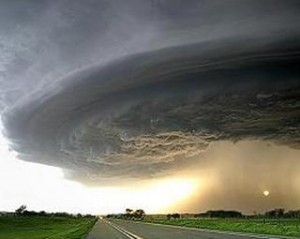
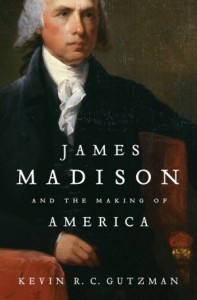
While the States were considering ratifying the Constitution, James Madison describes a prophetic ‘gathering storm’, doomsday scenario for the United States. However, his description was hypothetical and purportedly unlikely. Madison paints a picture of what the union would look like under healthy conditions and then contrasts that with terminal conditions that would destroy the union. His portrayal is fascinating and worth applying today.
In Federalist Paper 46, Madison discusses the happy and healthy situation where the Federal and State governments respect their constitutional boundaries. Madison says, “[the federal government will] be disinclined to invade the rights of the individual States, or the prerogatives of their governments”. Congress would be the “guardians of a common interest” and would not make “improper sacrifices…of local considerations, to the aggrandizement of the federal government”.
Madison continues, “the motives on the part of the States governments, to augment their prerogatives…will be overruled by no reciprocal predispositions in the members [of Congress].” In other words, the States will not want to intrude into federal authority because the Federal government will not intrude in State territory. In this “constitutional ideal”, Madison sees everyone respecting the authority of the other.
Madison then shifts his discussion to the hypothetical “what if”. He says, “[w]ere it admitted, however, that the Federal government may feel an equal disposition with the State governments to extend its power beyond the due limits, the [States] would still have the advantage in the means of defeating such encroachments” (emphasis added). Such means of defeating the federal government’s encroachments included actions like, “opposition”, “refusal to cooperate”, “frowns of the [State] executive”, “obstructions”, “signals of general alarm”, and “plans of resistance”.
Keep in mind, Madison’s description of “resistance” was made in context of a healthy, working union where the constitution remained and the amiable bonds of union were intact. The result of such conflicts within Federalism would ultimately be resolved through diplomacy where the people’s weight determined the outcome.
Madison furthers his “what if” hypothetical by describing a federal government that pursued “ambitious encroachments”. Madison predicts such usurpations would result in the same response “as was produced by the dread of a foreign, yoke”—namely, independence from the usurping government. However, Madison cannot fathom such an event taking place; he says, “[b]ut what degree of madness could ever drive the federal government to such an extremity.” Madison feels such actions would be advanced by madmen, not fellow patriots.
Still, Madison answers his own question (for the sake of appeasing his audience) when he describes the (implausible) circumstances ripe for this tyranny. Madison says, the “only refuge left for those who prophesy the downfall of the State governments is the visionary supposition that the federal government may previously accumulate a military force for the projects of ambition…[I]t [is not] necessary now to disprove the reality of this danger” (emphasis added).
Madison finds it unimaginable that the federal government could and would accumulate a military force capable and for the purpose of subduing the people and States. Madison bases his conclusion on these presumptions:
“(1) the people and the States [will not] elect…men ready to betray both; (2) [there will be no] traitors…[to] uniformly and systematically pursue some fixed plan for the extension of the military establishment; (3) the governments and the people of the States [will not] silently and patiently behold the gathering storm, and continue to supply the materials, until it should be prepared to burst on their own heads…(4) [and further] the State governments, with the people on their side, would be able to repel the danger [through militias]” (emphasis and numbers added).
So here we are in 2011. Our world is not James Madison’s world. Are Madison’s presumptions correct today? Is the U.S. military incapable of subduing the States? Do the people elect only patriots, and not traitors? Do the States have the capability of successfully protecting themselves against opposing military? Are the people capable of forecasting a gathering storm?
Reasonable persons would conclude, the U.S. military is more than capable of subduing the States; the people do elect traitors to office; and the States have no adequate means of defending themselves against opposing military force—from whatever source. (If someone has evidence to the contrary, let us see it.)
Now that the National Defense Authorization Act is law (see my previous articles on NDAA, here and here), Madison’s “gathering storm” scenario is more real than ever. So, how are the States to protect themselves from enemies domestic and foreign (as they have a constitutional duty to do—see, Art. 1, Sec. 3)? Is this an inappropriate question? If so, let us see the reason.
 It is a proven maxim that States have the duty and right to protect and sustain themselves. It is also a maxim that every government owes to its citizens protection (e.g. 49-1-201, Mont. Code Ann., “Every person while within the jurisdiction of this state is entitled to its protection”; Art. 1, Sec. 10, USC). In spite of the Second Amendment’s prescription that the States maintain a well-regulated militia to secure a “Free State” and the State constitutions and laws requiring State militias to protect the State’s homeland, there is not one State that is capable of protecting the citizens from domestic or foreign invasion.
Will the “gathering storm” result in an actual storm? God knows, and time will tell; but unless the people have the discretion and discernment to “behold the gathering storm”, it is unlikely the people will do anything about it until the storm of hail is smashing people’s heads in.
Tim Baldwin is a published author, public speaker, and a candidate for Montana’s State House of Representatives (website here). Baldwin is the author of Freedom For A Change, Romans 13-The True Meaning of Submission, and Political Discussions for People of States–all of which are available for purchase through Liberty Defense League and Romans13Truth.