
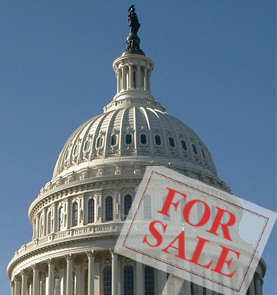
The greatest distinguishing factor between countries in which there is some freedom and those where authoritarian governments manage personal behavior is the Rule of Law. The idea that the very laws that the government is charged with enforcing could restrain the government itself is uniquely Western and was accepted with near unanimity at the time of the creation of the American Republic. Without that concept underlying the exercise of governmental power, there is little hope for freedom.
The Rule of Law is a three-legged stool on which freedom sits. The first leg requires that all laws be enacted in advance of the behavior they seek to regulate and be crafted and promulgated in public by a legitimate authority. The goal of all laws must be the preservation of individual freedom. A law is not legitimate if it is written by an evil genius in secret or if it punishes behavior that was lawful when the behavior took place or if its goal is to solidify the strength of those in power. It also is not legitimate if it is written by the president instead of Congress.
The second leg is that no one is above the law and no one is beneath it. Thus, the law’s restraints on force and fraud need to restrain everyone equally, and the law’s protections against force and fraud must protect everyone equally. This leg removes from the discretion of those who enforce the law the ability to enforce it or to afford its protections selectively.
This principle also requires that the law enforcers enforce the law against themselves. Of course, this was not always the case. In 1628, the British Parliament spent days debating the question “Is the king above the Rule of Law, or is the Rule of Law above the king?” Thankfully, the king lost – but only by 10 votes out of several hundred cast.
The third leg of the Rule of Law requires that the structures that promulgate, enforce and interpret law be so fundamental – Congress writes the laws, the president enforces the laws, the courts interpret the laws – that they cannot be changed retroactively or overnight by the folks who administer them. Stated differently, this leg mandates that only a broad consensus can change the goals or values or structures used to implement the laws; they cannot be changed by atrophy or neglect or crisis.
The values in America are set forth in the Declaration of Independence, and the governmental structures in America are set forth in the Constitution. The former – that our rights are inalienable and come from our Creator and not from the government – is not merely a recitation of Thomas Jefferson’s musings. The Declaration is the articulation of our values then and now, and it, too, is the law of the land.
The Constitution was written – largely by James Madison – to define and to limit the federal government, and it was quickly amended by adding the Bill of Rights so as to be sure that natural rights would be respected by the government. This tension between the power of the majority – at the ballot box or in Congress – and the rights of the minority – whether a discrete class of persons or a minority of one – is known as the Madisonian dilemma. Stated differently, the Constitution provides for protection against the tyranny of the majority.
In our system, the power to resolve the dilemma is reposed into the hands of the judiciary, and those who have that power are to resolve it without regard to popularity or politics. Their oath is to the Constitution. They have the final say on what the laws mean. If they follow the Rule of Law, they will invalidate that which the government has done and which is properly challenged before them and which is not authorized by the Constitution. Their very purpose is to be anti-democratic, lest the popular majority takes whatever lives, liberties or property it covets. In return for life tenure, we expect judicial modesty, and we demand constitutional fidelity – not political compromise.
In our era, the violations of the Rule of Law have become most troublesome when the government breaks its own laws. Prosecute Roger Clemens for lying to Congress? What about all the lies Congress tells? Prosecute John Edwards for cheating? What about all the cheating in Congress when it enacts laws it hasn’t read? Bring the troops home from the Middle East? What about all the innocents killed secretly by the president using CIA drones? Can’t find a way to justify Obamacare under the Constitution? Why not call it what its proponents insisted it isn’t – a tax?
We live in perilous times. The president acts above the Rule of Law and fights his own wars. Congress acts below the Rule of Law by letting the president do whatever he can get away with. And this summer, the Supreme Court rewrote the Rule of Law.
What do we do about it?
Andrew P. Napolitano [send him mail], a former judge of the Superior Court of New Jersey, is the senior judicial analyst at Fox News Channel. Judge Napolitano has written six books on the U.S. Constitution. The most recent is It Is Dangerous To Be Right When the Government Is Wrong: The Case for Personal Freedom. To find out more about Judge Napolitano and to read features by other Creators Syndicate writers and cartoonists, visit creators.com.
Copyright © 2012 Andrew P. Napolitano


I am going to have to disagree with the judge about the fact that the judiciary should be able to strike down law that it things are unconstitutional. It sounds great but I think it has lead to a judiciary that knows it can dictate what laws can pass and what can’t. They know they have veto power over every other branch of the government and the states themselves. This is the worst part about SCOTUS. I don’t care if they think they have the power to strike down federal laws but I draw the line at state laws because now the left is using the federal courts to strike down laws they don’t like. Think of SB1070, abortion laws, and now it seems they want the federal courts to tell states they have to publically fund abortion clinics.
Now if the courts were perfect beings who were incapable of bias, errors, and didn’t allow their own personal opinion affect their decisions then I would have no problem with it but who here is perfect in that regard? Why should we trust human nature in this affair?
Judicial review should be removed completely because as much as we all hate unconstitutional laws I don’t think we should replace it with a dictatorship. I would prefer democratic tyranny to judicial tyranny because in a democratic system I would have some control over those decisions but with judicial tyranny I don’t. I give you the fact that only 7% agree with the 1942 decisions that expanded the commerce clause. We can’t really do anything about it which kind of makes it a kind of dictatorship.
I also don’t think that judicial review is completely undemocratic. When it is used perfectly it does counter the legislative branch which makes it undemocratic but it can only counter that branch when it passes a law that violates the constitution. The constitution and all of its amendments are still democratically approved so it still is under the thumb of democracy and the will of the people. There should be no branch of the government that can act independtly of that.
PS. I generally did like this article. I was just disagreeing with judicial review.
@onetenther In general I do agree that the federal judiciary has the power to refuse to uphold/enforce any law or act which they find unautherised by the Federal Constitution.
My only quam about such a power is the idea, any one group have any kind of excusive or final word on the matter. No constitution of civil government can possably be upheld if it is to be enforced at the discretion of one man or group of men.
@Monorprise I think refusing to uphold or enforce any act that violates the constitution is fine but writing it out of the legislative code is completely different. I think the federal courts should just say we won’t preside over any cases dealing with this law since it violates the constitution. It will still be on the books and it would then fall to seperate and independent state courts to uphold it since they to have a jurisdiction over federal laws and the US constitution. It could be a way of checking federal courts.
Also, why not give the legislative branch the power to write rules of construction for either the constitution or the laws themselves. This way the people will have some control over how the constitution is interpretted by the court system. It still allows for judicial review but the people will have the final say over the meaning of the constitution itself. I can’t stand the idea that SCOTUS has decided to put itself as the final decider of the constitution. Who made them GOD!
@Monorprise There is another idea that I have thought of which is to have the federal government write its own rules of construction for the lower courts that it ‘ordains’. I assume the power to ordain a court is a broad power which might include the power to tell them how to interpret the constitution and if SCOTUS disagrees then we can create exceptions for them for such cases so that their opinion won’t interfere with this. That is a power the federal legislative branch has.
There is so much we can do. We can’t think of ourselves as powerless over this matter. We have to realize we are way smarter than the politicians who we elect. For that reason, we have to tell them what to do.
Not anymore . It’s The United Nations and their Security Council Chair’s Laws and they don’t care about your overthrown republic’s silly constitution !
no liberty in america thanks to the failed drug war
THIS is why Americans have the right to firearms! Even assault weapons!
If more people don’t stand to be counted and start raising a whole lotta Hell … as in, tossing all of these crooked Politicians out, then we can kiss it all good bye and consider the Grand experiment known as the United States of America … a failure.
James Madison wrote that- not the Judge…
No shit really?
like. 1000 times.
@PoliticalLogic The rule of Law is dictated from the UN now & it may or may not be reflective or U. S. law or the Constitution. No1 cares!!
I have a question for you all and a couple of foods for thought. Just what clause in the Constitution for the united States of America gives any judiciary any power to interpret law or that names any Court the United States Supreme Court or the Supreme Court of the United States?
And, yes, the two named above are different. The USSC is a municipal court for the District of Columbia, ten square miles that are NOT part of these States united but is foreign to the many states, while the SCOTUS is made up to appear to be the “one supreme Court” of Article III.
Now, if you study intensely, you will find that “court” is a process to determine justice – it is not a judge or judges. Only the people can interpret law, and the law must say exactly what it means and mean exactly what it says or it is void for vagueness.
Also, determine where any so-called government, whether federal, state or the local chartered corporations known as COUNTY OF ____ and CITY OF ____ has any law making authority upon the people,. We are the sovereign, not the wannabe tyrants that fill all governing bodies politic.
Freedom means, NOT UNDER GOVERNMENT CONTROL.
Private means, NOT UNDER GOVERNMENT CONTROL.
All determinations in law must be by a jury of one’s peers, not some black-robed – so to speak – tyrant that believes he is a law making authority.
The determination by the one supreme Court is simply that if one’s rights – and it only takes one man or woman’s or child’s rights to be violated – are violated. if so, then the rule (the Law is the Declaration of Independence and based on God’s laws) is unconstitutionally applied to the people.
This means any statute applied to the people is unconstitutional because none of the rules applied to the people have a victim.
Think about it and what the forefathers established as America. We are a union of individual nation states with people that are under the law, meaning that our rights are anything we want to do so long as we do not interfere with the rights of others. Rights cannot be legislated or voted away – they are inherent and inalienable.
And, that is the basis of the real America, with we people now suffering what must be called Gestapo America.
By the way, as with all judges/justices/magistrates, the judge is wrong. The Rule of Law does exist – they (all those in government and all bodies politic) just ignore it for their own greed and lust for power.