
To regulate Commerce with foreign Nations, and among the several States, and with the Indian Tribes;
So reads Article 1, Section 8, clause 3 of the United States Constitution. If you are not already familiar with this clause, please take a moment to look carefully at those few words, 
To regulate Commerce
- with foreign Nations
- and among the several States
- and with the Indian Tribes
This really isn’t very complicated. Even those of us who are not lawyers can probably manage to understand what these sixteen words and two commas mean. What rational person, starting with those words, would conclude that they delegate to congress the power to limit the amount of wheat that a farmer grows on his own farm to feed to his own livestock? If those words had been intended to regulate an individual’s use of his own property on his own property, wouldn’t it have been simpler to just say “To regulate anything anywhere”? It’s an absurd claim. It’s an outrageous abuse of language. It’s the law.
Many people are familiar with Wickard v. Filburn. In 1941, Ohio farmer Roscoe Filburn was charged with exceeding his wheat allotment as determined by the 1938 Agricultural Adjustment Act (AAA). Filburn argued that the excess wheat was fed to his own livestock, thus never left his property and was not subject to regulation under Article 1, Section 8, clause 3. This is a logically indisputable argument to anyone except a federal official. However, the supreme court ruled against Filburn. Wikipedia excerpts the following from the decision,
Whether the subject of the regulation in question was ‘production,’ ‘consumption,’ or ‘marketing’ is, therefore, not material for purposes of deciding the question of federal power before us. That an activity is of local character may help in a doubtful case to determine whether Congress intended to reach it…. But even if appellee’s activity be local and though it may not be regarded as commerce, it may still, whatever its nature, be reached by Congress if it exerts a substantial economic effect on interstate commerce and this irrespective of whether such effect is what might at some earlier time have been defined as ‘direct’ or ‘indirect.’ (emphasis mine)
So in this often discussed case, our federal supreme court managed to find it Constitutional for congress to regulate an activity that is quite obviously not even commerce, let alone Commerce with foreign nations, or among the several States, or with the Indian tribes.
A similar chapter of abuse of the so-called Interstate Commerce Clause is found in Pennsylvania’s own history. In 1954, Joseph Blattner, of Center Square in Worcestor township of Montgomery County, grew 24 acres of wheat for feeding of his own hens. His limit, as determined by the AAA was 16 acres, so he was fined for the 8 “excessive” acres. Blattner and a number of his contemporaries filed suit to enjoin the federal government from interfering with the plaintiff’s sale of produce, purchase of wheat or raising of grain for feed.
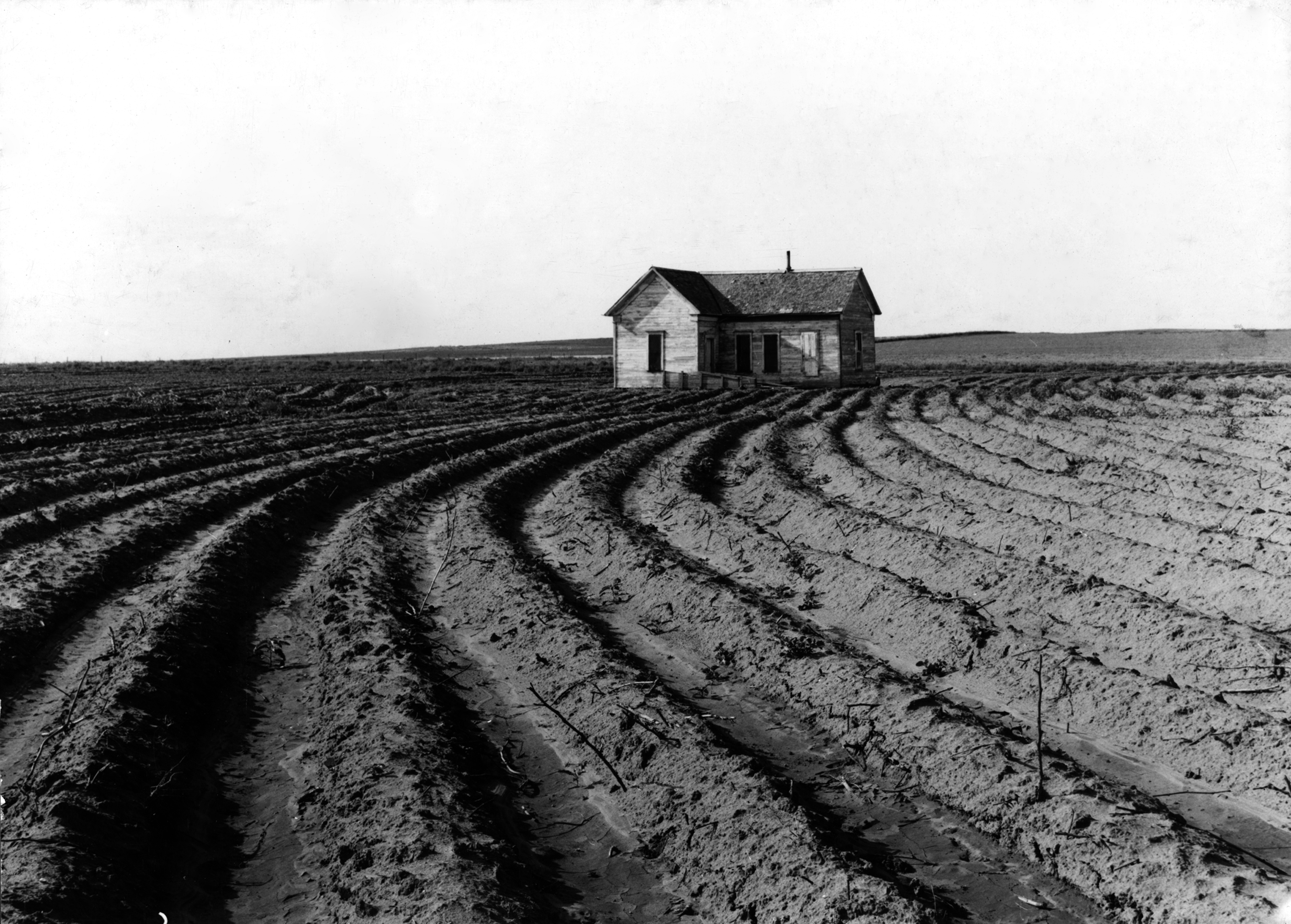
In 1955, the Freeman wrote,
The basis of the suit was in the fact that none of the Blattner farm produce “grain, chickens, or eggs” was involved in interstate commerce, the regulation of which provides an all-covering canopy under which Washington legislates and controls.
…
One of [Blattner’s] attorney Weaver’s strongest arguments is his declaration that the Agricultural Adjustment Act is class legislation, in that “it takes property from one class, the raisers of poultry, and gives it to another class, the big growers of wheat.”
In 1954, the Victoria Advocate wrote,
Blattner demands that the government be enjoined from preventing him from raising his usual crops on his own land. He has been fined $179.20 as a penalty for raising wheat in excess of government allotments. He contends that he needs the 24 acres of wheat he sowed to feed 6,000 laying hens. He says the government is taking his property without due process of law.
And the Sarasota Herald-Tribune wrote,
In the absense of the usual gobbledegook this is a very simple problem, now isn’t it? All farmer Blattner asks is that he not be pestered by the government while trying to run his farm in his own way — a way that had been proper and legal until we became involved in great wars….
And some farmers are at last seeing the light. They see a scheme which started out with about one control for each advantage slowly merging into one where there will ultimately be a dozen controls for each advantage. And they are beginning to envision a time when not even feed for their chickens can be grown without government consent.
The Freeman also cites Weaver, Blattner’s attorney, as saying,
If this Court gives the Federal Government absolute control over this non-subsidy taking farmer, it is the same as saying: “The Ninth and Tenth Amendments to the Constitution are hereby repealed. The Federal Government now has full control over the individual and his property” in every activity in all states of this Union.
Ultimately, Blattner’s complaint was dismissed and that dismissal was upheld by the supreme court in 1955. History has proven Weaver’s argument to be exactly right. When regulating commerce among the several states is interpreted to mean regulating non-commerce activity confined to an individual’s property, it can be interpreted to mean any power whatsoever… Even the power to force an individual to buy health insurance. We no longer have a limited government.
In addition to the abuse of language required to twist the commerce clause to cover the AAA in these circumstances, something else evidenced in Blattner is the concept of rent seeking. Rent seeking happens when large businesses ally themselves with government to promote regulation which will eliminate competitors from the market place. At the same time Blattner was being prohibited from growing wheat on his own property for use by his own livestock, his largest farm competitors were being subsidized in order to promote bigger crops. We see similar rent seeking behavior from the tobacco industry today. It is also likely that the health insurance industry now has similar goals in mind. Pennsylvania still has a strong agricultural industry, but how much stronger would it be if this selective pressure had not been levied by the federal government on behalf of the large farming interests?
Farmer Blattner and his small group of contemporaries fought a battle which affected all of the small Pennsylvania farmers and they apparently fought it without the aid of Pennsylvania’s state officials. In the Virginia Resolution of 1798, James Madison wrote,
That this Assembly doth explicitly and peremptorily declare, that it views the powers of the federal government, as resulting from the compact, to which the states are parties; as limited by the plain sense and intention of the instrument constituting the compact; as no further valid that they are authorized by the grants enumerated in that compact; and that in case of a deliberate, palpable, and dangerous exercise of other powers, not granted by the said compact, the states who are parties thereto, have the right, and are in duty bound, to interpose for arresting the progress of the evil, and for maintaining within their respective limits, the authorities, rights and liberties appertaining to them. (emphasis mine)
And in Federalist No. 51, he wrote,
In the compound republic of America, the power surrendered by the people is first divided between two distinct governments, and then the portion allotted to each subdivided among distinct and separate departments. Â Hence a double security arises to the rights of the people. The different governments will control each other, at the same time that each will be controlled by itself.
 It didn’t work that way for Blattner, did it? Pennsylvania was duty bound to interpose itself on farmer Blattner’s behalf in defense of the plain sense and intention of the Constitution. Why didn’t that happen? I haven’t found that answer, but we now have 55 years of history telling us the consequences of the state’s failure. The state left farmer Blattner flapping in the wind against an onslaught from the federal machine. As a result, countless small Pennsylvania farmers have paid a price. May we learn from history and demand better from our own state officials.
Today, happily, there are several Tenth Amendment battles being waged among the people, the states and the federal government. Some of the fiercest have to do with the Intolerable Act of 2010, the Patient Protection and Affordable Care Act. In one such challenge, according to this video, the Obamacare Class Action (OCA) suit is also directly challenging the ridiculous precedent which has been established by the courts for interpretation of the Interstate Commerce Clause. At this moment, 344 Pennsylvanians have signed on to be plaintiffs. This is a tall order, but if the OCA suit succeeds, it will replace some of the Tenth Amendment’s original teeth. Teeth which were long ago extracted by the Agricultural Adjustment Act of 1938 and subsequent supreme court decisions.
Steve Palmer is the State Chapter Coordinator for the Pennsylvania Tenth Amendment Center.
Copyright © 2010 by TenthAmendmentCenter.com. Permission to reprint in whole or in part is gladly granted, provided full credit is given

- The Whiskey Rebellion: True History and Hidden Lessons - February 24, 2015
- Prohibition Repeal: Another Nullification Success Story - December 4, 2014
- Why American Businesses Should Understand Nullification - December 11, 2013