
by Andy Quesnelle, Pennsylvania Tenth Amendment Center
If the finest hour for the people of East Germany occurred with the fall of the Berlin Wall on November 9, 1989, one of the lowest moments occurred just over one month before. On October 7, 1989, East German leader Erich Honecker hosted all of the Communist dictators of the Warsaw Pact – including Soviet Premier Mikhail Gorbachev – in East Berlin to celebrate the 40th anniversary of the independent East German state. By this point, East Germany, like the other nations of Eastern Europe, teetered on the precipice of bankruptcy and economic disaster. Nevertheless, the event had all of the trappings of a typical Communist get-together – a military parade and much pomp and circumstance. That night, however, the members of the East German Communist Youth Group, the Freie  Deutsche Jugend, marched in a torchlight parade in front of Honecker, Gorbachev, and their Communist brethren. These were the cream of the Communist Party’s younger generation and the future of East Germany. All of a sudden, quietly at first and then building to a crescendo, the young people began chanting “save us, Gorby, save us!â€Â It was truly a pitiful sight. A lifetime of Communist dictatorship had done its job well. None of these young people had any sense of pride, self-reliance, or confidence. Faced with East Germany’s insurmountable problems, they begged the dictator of the nation that held its boot on the neck of their own for over 40 years to “save them.â€
While this event shows the pathetic state of affairs beyond the Iron Curtain, is it that different from the attitude may Americans have towards their President? In recent weeks, as the oil crisis in the Gulf of Mexico continues, politicians, pundits, and citizens alike have excoriated President Obama for his “failure†to curb the leaking pipe in the Gulf and to stop the flow of toxic crude oil into the water and onto the beaches and marshlands of the Gulf Coast. Former Vice-Presidential candidate Sarah Palin’s response is typical of the outrage: “The fundamental problem at the core of this crisis is a lack of responsibility. There’s a culture of buck-passing at the heart of this administration that has caused the tragedy of a sunken oil rig to turn into a potential disaster.” House Republican Conference Chairman Mike Pence has stated that “People in the Gulf of Mexico deserve better†than Obama’s “response.â€Â Even James Carville, the well-known Democratic pundit, has put Obama in his crosshairs: “The president doesn’t get down here in the middle of this… I have no idea of why they didn’t seize this thing . . . I have no idea of why their attitude was so hands off here.”
If you needed any proof of the fact that the two major political parties are out for themselves and lack even a shred of principle, here is the evidence. Republicans, who are supposed to be the party of “small government,†have dropped their small government principles to rage at President Obama for not being active enough simply as a “tit-for-tat†for the equally pernicious Democratic criticism of President Bush during Hurricane Katrina. It hearkens back to that day in East Berlin – its as if everyone is crying out for President Obama to “save us,†and yet nobody stops to think about whether this crisis has anything to do with the President’s job description.
While many ideas from the Founding era can be said to be up for debate, it is indisputable that the words “save us†never entered the thoughts of the Founders when establishing the office of the Presidency. In the Constitution, the Presidency is established in Article II, an Article which is dwarfed in size by its companion, Article I, which creates Congress. The powers granted to the President in Article II are actually very limited. They are:
  1)  The power to be commander-in-chief of the military;
  2)  The power to require the written opinion of officers from the executive departments;
 3)  The power to commute sentences and grant pardons;
  4)  The power to make treaties (with advice and consent of the Senate);
  5)  The power to nominate ambassadors, public officers, and judges (with advice and consent of the Senate);
  6)  The power to issue recess appointments for public officers and judges;
  7)  The power to convene Congress when not in session;
  8)  The power to adjourn Congress when it cannot agree on time for adjournment;
 9)  The power to receive foreign ambassadors and ministers;
10)Â The power to commission officers of the United States.
Added to these powers are two duties: 1) The duty to give to Congress, “from time to time,†information on the state of the Union, and 2) The duty to ensure that the laws are faithfully executed. Finally, Article I, obviously, also gives the President power to assent to or veto laws passed by Congress. These powers can be boiled down into two broad generalities – foreign affairs and enforcing Congressional enactments.
The President was to be America’s “first officer,†not its savior. In other words, the President is not there to ease the pain of individual citizens or groups of citizens when things do not go their way.Â
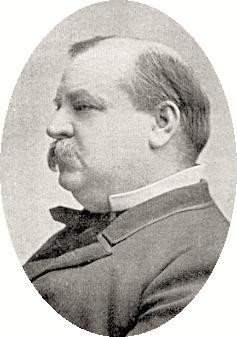
Americans should take an example from Grover Cleveland, one of the most forgotten presidents on our history. The reason why he is so unknown is because he espoused a theory of strict limitations on federal power, and presidents who resist the urge to use federal power to solve every problem tend not to end up in the history books. In 1887, a horrible drought hit Texas. The drought destroyed the crops of many Texas farmers, thereby threatening their livelihoods. In response, Congress passed the Texas Seed Bill, a statute which appropriated over $10,000 to purchase new seed for these beleaguered farmers so that they could re-plant their crops and avoid financial ruin. President Cleveland, famously and in a principled, constitutional stand, vetoed the bill. His message to the House of Representatives explaining the veto is worth quoting at length:
It is represented that a long-continued and extensive drought has existed in certain portions of the State of Texas, resulting in a failure of crops and consequent distress and destitution.
Though there has been some difference in statements concerning the extent of the people’s needs in the localities thus affected, there seems to be no doubt that there has existed a condition calling for relief; and I am willing to believe that, notwithstanding the aid already furnished, a donation of seed-grain to the farmers located in this region, to enable them to put in new crops, would serve to avert a continuance or return of an unfortunate blight.
And yet I feel obliged to withhold my approval of the plan as proposed by this bill, to indulge a benevolent and charitable sentiment through the appropriation of public funds for that purpose.
I can find no warrant for such an appropriation in the Constitution, and I do not believe that the power and duty of the general government ought to be extended to the relief of individual suffering which is in no manner properly related to the public service or benefit. A prevalent tendency to disregard the limited mission of this power and duty should, I think, be steadfastly resisted, to the end that the lesson should be constantly enforced that, though the people support the government, the government should not support the people.
The friendliness and charity of our countrymen can always be relied upon to relieve their fellow-citizens in misfortune. This has been repeatedly and quite lately demonstrated. Federal aid in such cases encourages the expectation of paternal care on the part of the government and weakens the sturdiness of our national character, while it prevents the indulgence among our people of that kindly sentiment and conduct which strengthens the bonds of a common brotherhood.
In other words, Congress and farmers in Texas cried out “save us, Grover, save us,†and President Cleveland eloquently declined. His rationale, as stated above, was simple – the President of the United States is given authority to exercise powers in the service of the whole people of the United States, but not to involve himself in every unfortunate incident that plagues parts of that whole. The oil spill in the Gulf of Mexico, while tragic, is similar to the plight of the Texas farmers in 1887. That incident was not President Cleveland’s responsibility – nor is the oil spill President Obama’s. The tendency to give the President a hand in everything is a substantial cause of the federal government trampling on state prerogatives.
The people of the Gulf Coast region are suffering greatly from this tragedy. Many will likely lose property, others their livelihood. BP – which is actually responsible for the mess – will have to clean up  the oil, but the responsibility for rebuilding the Gulf Coast will fall to the people of the Gulf Coast and to their State governments, which are far closer to the disaster than the federal government and can better assist in the recovery. You may find this reality harsh. But it is actually just the opposite. It reflects the belief that the people in this country have the ability and the fortitude – with the help of their neighbors, family and friends – to bounce back. It’s a testament to the “sturdiness†of their character.Â
East Germany’s collapse was imminent when its citizens begged Gorbachev to “save us.â€Â The proper response to the Gulf oil crisis is not “save us, Obama, save us†and to criticize the President for not doing so quickly enough. Rather, the proper response is to say, as citizens, that we’re going to band together and beat this crisis without complete reliance on the federal government. That’s what Americans do when the going gets tough.
Andy Quesnelle spent most of his early childhood in Cincinnati, Ohio and moved to Pittsburgh, Pennsylvania in 1992. He has lived in Pittsburgh ever since, except for the 7-year period during which he was in college and law school. He graduated from the University of Michigan in 2003 with a B.A. in History and Political Science. His primary areas of concentration were Colonial American History, 20th Century U.S. History, and American politics and government. He received his J.D. from Villanova University School of Law in 2006. Since then, he has practiced as a labor and employment attorney, representing management and employers, in Pittsburgh. He has always been a very strong advocate of states’ rights and decentralized government. He believes that Thomas Jefferson was absolutely right — government power is not to be trusted, and the more centralized government power becomes, the less it is to be trusted.