
Bill of Rights: The Founders’ Vision is Dead and Gone

Editor’s Note: Bill of Rights Day is December 15th. But as Kevin Gutzman points out in this article, originally published December 14, 2009, it’s not a day of celebration. Instead, it should be a day of mourning for the death of decentralized self-government.

In 2008, the Supreme Court of the United States decided Kennedy v. Louisiana. In that decision, the Court created a new categorical right to rape a child without receiving the death penalty.

Although the majority made mention of the Eighth Amendment’s prohibition of “cruel and unusual punishment,” no one really believed that this new right had any basis in the Constitution. The Court majority claimed that its decision reflected a new societal consensus, despite the fact that six states and, as it turned out, Congress recently had adopted legislation providing capital punishment for certain child rapists. The dissenting justices said that the actual basis of the Kennedy decision was “the Court’s ‘own judgment’ regarding ‘the acceptability of the death penalty,’” but the majority opinion made clear that the Court simply differed with the people’s representatives on the question how significant rape of a child is.

In other words, the justices substituted their legislative will for that of elected legislators. Alas, there was nothing unusual about this. Kennedy v. Louisiana illustrates what has come of the Bill of Rights in our day.

The Bill of Rights should be mourned, not celebrated. It is defunct. Intended as the bulwark of the right of decentralized self-government, it now serves mainly as an excuse for the opposite: a roving judicial veto of state policies that federal judges dislike.

So, if the people of virtually every state ban flag burning or regulate abortion, provide capital punishment or support prayer in school, that does not settle the matter. Unlike 200 or 100 years ago, today the federal judiciary is apt to step in to stop state legislatures from adopting policies like this.

The people never consented to have the federal judges behave this way.

virginias-american-revolutionThe purpose of the first ten amendments was laid out clearly by their Preamble. “Preamble?” You might ask. “What preamble?” Although the main body of the Constitution is never published without its Preamble, one could study American history for a lifetime without ever encountering the Preamble to the Bill of Rights.

That Preamble says that Congress is recommending amendments to the states because a number of states in ratifying the Constitution “expressed a desire, in order to prevent misconstruction or abuse of its powers, that further declaratory and restrictive clauses should be added.” Since the people were afraid of the new Federal Government, that is, the Bill of Rights was being added to hedge in the powers of the Federal Government more carefully.

So, for example, the Tenth Amendment stated what Thomas Jefferson called the underlying principle of the entire Constitution: “The powers not delegated to the United States by the Constitution, nor prohibited by it to the States, are reserved to the states respectively, or to the people.” In other words, the Constitution gave the Federal Government a few enumerated powers, and those were all.

That is why the First Amendment begins by saying that, “Congress shall make no law.” Congress, not government generally. The point was to leave such questions in the hands of elected state legislators.

America’s Revolution was fought and won in the name of self-government via elections to state legislatures. King George III and Parliament insisted that those legislatures could legislate only when and as far-off officials essentially unaccountable to American colonists said they could. The Americans rejected that idea. In fact, rejecting that idea was what made Britain’s North American colonists into Americans.
No surprise, then, that six years after the Revolution ended, in the First Congress, the people insisted that the principle of local self-government “” of federalism “” be made explicit through the Tenth Amendment and the other nine. They wanted explicit statements that the distant new Congress could not violate Americans’ most cherished rights “” rights the king and Parliament had repeatedly infringed.

This was an uncontroversial understanding of things in the Constitution’s first century and more. The Supreme Court unanimously said in 1833 and thereafter that the Bill of Rights was a limitation solely on the Federal Government.

But the 20th century saw a great change. The Progressives of the early part of the century opposed constitutional limitations on government power generally, and the New Deal of the 1930s stood for the elimination of the Tenth Amendment from constitutional law. Congress’s power is essentially unlimited today, and federal courts have come to supervise virtually all state policies “” essentially on the basis of federal judges’ policy preferences.

No one today even pretends that the Bill of Rights serves its intended purpose of restraining the Federal Government. Quite the opposite. And the death of decentralized, election-based government is entirely lamentable.

About Kevin Gutzman

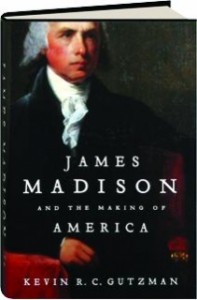
Kevin R. C. Gutzman, J.D., Ph.D., Associate Professor of History at Western Connecticut State University, is the best-selling author of James Madison and the Making of America. He's also the author of Virginia's American Revolution: From Dominion to Republic, 1776-1840 and The Politically Incorrect Guide to the Constitution. He is co-author, with Thomas E. Woods, Jr., of Who Killed the Constitution? The Federal Government vs. American Liberty from World War I to Barack Obama.

Enjoyed This Post?

We cannot succeed without your help, as we will never accept government grants or handouts. Please help us by investing in the Constitution and freedom today!

Enjoyed This Post?
8 comments
cptbanjo
cptbanjo

The author's failure to discuss the 14th Amendment as the basis for applying the Bill of Rights to the States is astonishing.  It's as if he believes the States should be able to do anything they want to, as long as there's no explicit prohibition in the Constitution.

Austin Holthaus
Austin Holthaus

 @cptbanjo "It's as if he believes the States should be able to do anything they want to, as long as there's no explicit prohibition in the Constitution."Please don't forget that the States had Constitutions before the United States had a Constitution, or even a ratified Articles of Confederation.  Those documents contained the necessary protections upon which the States would later demand be added to the United States Constitution during its ratification.  


As for incorporation, even the drafter of the the portion of amendment incorporationists claim makes the BoR apply to the States reinforces that it was only intended to ensure States were complying with the Constitution's "privileges and immunities" clause (which existed BEFORE and is uniquely separate from the BoR).  It was not intended to add anything new according to Mr. Bingham...the individual often cited as the one intending incorporation. 

http://www.federalistblog.us/h-r-report-no-22-bingham/"The clause of the fourteenth amendment, “no State shall make or enforce any law which shall abridge the privileges or immunities of citizens of the United States,” does not, in the opinion of the committee, refer to privileges and immunities of citizens of the United States other than those privileges and immunities embraced in the original text of the Constitution, article four, section two. The fourteenth, it is believed, did not add to the privileges or immunities before mentioned, but was deemed necessary for their enforcement as an express limitation upon the powers of the States. It had been judicially determined that the first eight articles of amendment of the Constitution were not limitations on the power of the States, and it was apprehended that the same might be held of the provision of the second section, fourth article." 

WilliamSchooler
WilliamSchooler

So what the Colonists had no concept if living independently before the American revolution? Didn’t Thomas Jefferson himself visit independent living before the American Revolution, how was he so certain he should document such a statement?


So, for example, the Tenth Amendment stated what Thomas Jefferson called the underlying principle of the entire Constitution: “The powers not delegated to the United States by the Constitution, nor prohibited by it to the States, are reserved to the states respectively, or to the people.” In other words, the Constitution gave the Federal Government a few enumerated powers, and those were all.

Isn’t this underlying principle based on Independent Living in these states or the independent people? Over King George III Populous agendas?

America’s Revolution was fought and won in the name of self-government via elections to state legislatures. King George III and Parliament insisted that those legislatures could legislate only when and as far-off officials essentially unaccountable to American colonists said they could. The Americans rejected that idea. In fact, rejecting that idea was what made Britain’s North American colonists into Americans.

So it was fought in the name of Independent self Governing without the over reaching of Governing? The Americans, the Independent deciding at that time? Resisting any such nonsense as British rule and corruption?

Funny how it sounds when you write it in living english versus passed down over and over language from book to book comprehensions. Who dare put on the shoes of those before them and live it out.


The truth is the Constitution had so much rebellion because of those pretending to be Independent while repulsing the thought of such an event and interpretations became the practice of influence and compromise over good distinct examples as written in the Declaration of Independence, the very first choice to discontinue dependence from a criminal source.

Clearly by the time the Bills of Rights was being conceived clear evidence of intruders was widely apparent so more limits were being demanded to secure independence in American Living

In the late 1800s there was evidence Corporate intrusion was taking place and by the early 1900s it took over Federal Government in the Form of the Federal Reserve and was now apparent that no resistance was going to take place.

So somewhere in those 1800s the idea of living independently became corrupt probably through the conformity to Religious ways of living which was killing independence as a way all upon its own.


 I hate to be a party pooper, really we have gotten so literal with these writings and talk like people were robots in that time, hardly, like us they wanted to live and sustain in communities as well sustain the community but popular became a way of Life rather than independent review of examples. It became the intellectual era where standing on a podium exceeded proof of concept. But look how well he expressed himself he must know what he is talking about like our paster. The bantering about over interpretations and the ability to make others look wrong again with no examples of proof. Today this whole concept is only enhanced 100 fold, a bunch of non producing non independent minds making choices with prestige over substance. These habits have infiltrated everything we do today and not one will discuss the origin of America at all. To be Independent rather than dependent upon criminals.


I asked what Independence meant to people and how have they lived it and what examples of it can they share. Guess how many responded? 2 and one put down the definition in the dictionary and not one example and other only expressed he was but not what it meant or any examples.


I have tested this other places also, my favorite is those with Graduate degrees, man what party that is. These people are completely clueless. This does not mean I don't like them or do not respect all the work they have put in, I truly do but their examples suck.


The constitution in one word is Liberty when it is applied by the principles in the Declaration of Independence which is the entire foundation or why have Liberty at all. Independence came first and securing this was implemented by the constitution in support of LIFE (independent minds of choice) to have in place Liberty, Limits to those they appointed to govern who were only their to secure this way of living. This in turn allowed independent minds to use this ability to manifest their own imaginations to sustain them, their families, their community and their state. In other words to Pursue achievements that would manifest this happiness of living in such a manner and share with others the examples of ourselves.


Yet no one gets it, all pretend to know and understand and not one thing changes, why? Add this to an attempt to correct something so corrupt it is out of this world and all this energy is exerted with some high hope yet 0 is really accomplished because the corrupt still exists bigger now than when we started. We refuse to use our own start, we refuse to fully understand its contents, we refuse to learn about ourselves from such an exploration.


So I will ask all of you;

What does independence mean to you as you lived it and what examples can you share? 

I will post mine when two reply with theirs. Lets us see each other and really find out what we really know about our own new beginning, it should be good.


Bob Greenslade
Bob Greenslade like.author.displayName 1 Like

The Amendments, which comprise the Bill of Rights, would be easier to understand if they had been titled the Bill of Prohibitions or Bill of Restraints.


When the Bill of Rights is read through the preamble, it shows that none of the Amendments define or limit the extent of the individual rights of the people. The Amendments do, however, define and enumerate the extent of the restraints placed on the powers of the federal government concerning the rights of the people and the powers reserved to the States.


We need to stop using and start rejecting statements like “First Amendment Right of free speech” or “Constitutional right of free speech.” We have the right of free speech and the First Amendment simply placed a constitutional prohibition or restraint on the powers of the federal government concerning the right. The Amendment did not grant us this right.


The road to resurrecting the intent of the Amendments should start right now, right here, and with us. Whenever the intent of the Amendments is mischaracterized, we need use it as an educational moment to enlighten our fellow citizens.


Austin Holthaus
Austin Holthaus like.author.displayName 1 Like

 @Bob Greenslade "We need to stop using and start rejecting statements like “First Amendment Right of free speech” or “Constitutional right of free speech.” We have the right of free speech and the First Amendment simply placed a constitutional prohibition or restraint on the powers of the federal government concerning the right. The Amendment did not grant us this right."Absolutely, 100% correct!  We HAVE to start referring to these as PROTECTIONS of rights.  These rights existed before the BoR, exist during its validity, and will exist after the United States ceases to exist.  

Trackbacks

  1. [...] the rest of this article at: http://tenthamendmentcenter.com/2012/12/15/bill-of-rights-day-the-founders-vision-is-dead-and-gone/ Click "Home" to find this article in English. Clic "Inicio" para encontrar este artículo en [...]

  2. [...] In other words, the justices substituted their legislative will for that of elected legislators. Alas, there was nothing unusual about this. (more…) [...]

  3. [...] Bill of Rights: The Founders' Vision is Dead and Gone [...]

  4. [...] Bill of Rights: The Founders’ Vision is Dead and Gone – Tenth Amendment Center. Rate this:Share this:TwitterStumbleUponRedditEmailPrintLike this:LikeBe the first to like this. Posted by lobotero Filed in Civil Rights, Government, History, Observations Tags: Bill Of Rights, Founding Fathers, Historical Events Leave a Comment » [...]

  5. [...] Gutzman tenthamendmentcenter.com December 20, [...]

  6. [...] Bill of Rights: The Founders’ Vision is Dead and Gone [...]