
A Republican Form of Government: Citizen Lawmaking

The Anti-U.S. Origins of a Key Argument Against Letting the People Vote on Laws and Taxes

Opponents of popular government, such as those now challenging Colorado’s Taxpayer Bill of Rights (TABOR), argue that when a state allows the people to vote directly on laws or taxes it violates the U.S. Constitution’s mandate that every state have a “Republican Form of Government.”

They claim their view comes from the American Founders. In fact, it comes from those who opposed, and probably would have hanged, the Founders. In other words, from the Tories who opposed the creation of our country.

At the outset, please understand that the claim that initiatives and referenda are “unrepublican” is complete constitutional malarkey. When the words “Republican Form” were written, most of the republics in history had featured direct citizen lawmaking. Some Founders didn’t care for that sort of lawmaking, but none suggested it was unrepublican. On the contrary, several Founders spoke of a republic as a government in which the people made laws directly or through representatives—so long as they honored the rule of law. The Founders often referred to governments with direct citizen lawmaking as “republics”, among them ancient Athens and the Roman Republic.

Dictionaries of the time defined “republic” as a popular government or a non-monarchy. None excluded governments with direct citizen lawmaking. True, the Founding-Era record includes rare references to “pure democracy” (direct mob rule without magistrates) being unrepublican, but that was because it violated the rule of law. Technically, “democracy” was one of the two forms of republicanism (the other being aristocracy). Many Founders used the words “republic” and “democracy” interchangeably.

So where did the story arise that the people could not retain for themselves power to vote on laws directly?

Answer: In the months leading up to the American Revolution, it was part of the Tory attack on the patriot cause.

For example, in January, 1775, Samuel Seabury, a clergyman deeply opposed to the assertion of American rights, published a pamphlet called, “An Alarm to the Legislature of the Province of New-York.” On page 4, wrote:

It is the happiness of the British Government, and of all the British Colonies, that the people have a right to share in the legislature. This right they exercise by choosing representatives; and thereby constituting one branch of the legislative authority. But when they have chosen their representatives, that right, which was before diffused through the whole people, centers in their Representatives alone; and can legally be exercised by none but them.

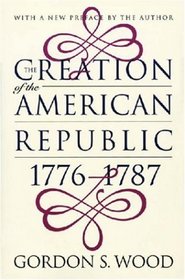
In other words, when the people elect legislators, they can retain no lawmaking power for themselves. This argument was an integral part of the Tory message. (See Gordon Wood,The Creation of the American Republic, 1776-1787 [1969, 1998], pp. 314-15.)

The American Revolution discredited arguments like this for a while, but they re-surfaced in the 1840s. Early in that decade, a popular and generally peaceful uprising under the leadership of Thomas Wilson Dorr broke out in Rhode Island. The protesters elected their own state officials and demanded reform of Rhode Island’s archaic constitution.

Dorr’s opponents argued that his methods of direct democracy violated the republican form of government. This argument, although historically flawed, showed staying power. In 1847, the Delaware Supreme Court decided Rice v. Foster, the only significant case to rule that direct citizen lawmaking violated the republican form. Consciously or not, the court’s reasoning came straight from Samuel Seabury:

The sovereign power therefore, of this State, resides with the legislative, executive, and judicial departments. Having thus transferred the sovereign power, the people cannot resume or exercise any portion of it. To do so, would be an infraction of the constitution, and a dissolution of the government.
And just in case it might occur to the people of Delaware to amend the Constitution to reserve for themselves the right to vote on laws, the Delaware court warned them that it would strike down any such effort:

And although the people have the power, in conformity with its provisions, to alter the constitution; under no circumstances can they, so long as the Constitution of the United States remains the paramount law of the land, establish a democracy, or any other than a republican form of government.

To this day, Delaware remains the state where the people have the least direct lawmaking power—although even Delaware now permits the legislature to refer proposed statutes to the voters.

Those opposing TABOR claim their argument is based on the views of the American Founders. But it really derives from Tory zealots deeply opposed to the creation of the United States of America.

Enjoyed This Post?

We cannot succeed without your help, as we will never accept government grants or handouts. Please help us by investing in the Constitution and freedom today!

Enjoyed This Post?
4 comments
Sort: Newest | Oldest
RustyBongard
RustyBongard like.author.displayName 1 Like

Reposted here with the permission of the author.  GOVERNMENT (Republican Form of Government)- One in which the powers of sovereignty are vested in the people and are exercised by the people ... directly ... - ...- - Black's Law Dictionary, Sixth Edition, P. 695

   People - DIRECTLY - exercise sovereignty.

This "revolutionary" concept of sovereignty derives from the fourth Article of Confederation: "The better to secure and perpetuate mutual friendship and intercourse among the people of the different states in this union, the free inhabitants of each of these states... shall be entitled to all privileges and immunities of free citizens in the several states ..." [Article IV of the Articles of Confederation (1777)]

   Remember, a citizen is a SUBJECT, obligated to perform M A N D A T O R Y civic duties.

   Free inhabitants had their endowed rights and powers PLUS any privileges and immunities that government granted to its own subject citizens.

   AMERICAN PEOPLE ARE SOVEREIGN - says the courts

The people of the state, as the successors of its former sovereign, are entitled to all the rights which formerly belonged to the king by his own prerogative. Lansing v. Smith, (1829) 4 Wendell 9, (NY)

   At the Revolution, the sovereignty devolved on the people and they are truly the sovereigns of the country. Chisholm v. Georgia, 2 Dall. 440, 463

    It will be admitted on all hands that with the exception of the powers granted to the states and the federal government, through the Constitutions, the people of the several states are unconditionally sovereign within their respective states. Ohio L. Ins. & T. Co. v. Debolt 16 How. 416, 14 L.Ed. 997

    In America, however, the case is widely different. Our government is founded upon compact. Sovereignty was, and is, in the people. [ Glass vs The Sloop Betsey, 3 Dall 6 (1794)]

    Sovereignty itself is, of course, not subject to law, for it is the author and source of law; but in our system, while sovereign powers are delegated to the agencies of government, sovereignty itself remains with the people, by whom and for whom all government exists and acts. [Yick Wo vs Hopkins, 118 U.S. 356, 370 (1886)]

william joseph
william joseph

Imagine The Swiss who created there government in our image along with the dutch system as a representative republic and the rule of Law as the sovereign. Who is the sovereign in America? answer the constitution is. Actually all 3 power structures the federal, state and people deciding in unity are the sovereign in present tense. IE the tenth amendment is the key in silence to who is sovereign each holding sovereignty in there own sphere or jurisdiction. How do we amend the law of the land well it takes all 3 sovereign jurisdictions to do so. The Swiss citizens have what is known as direct democracy effectively nullifying laws which they dislike. There philosophic concept is if we believe we have a Representative that they were chosen because we decided they were a lot like us, Now that they are in they can do as they please. Well we the people will have the final say.


This is what America really needs to coral the run away corruption of all 3 federal branches corroborating on donating all 3 sovereign powers to a NON national governance organization Namely the UN. The States need to remind the Fed a treaty may be the law of the land except when it attempts to remove the constitution it self which grants the fed the power to treaty. In essence William Marbery VS James Madison clearly backs my concepts as well as the article 6 nullity clause. and its the People who must remind the states that its our will which trumps the will of the  federal government.


WilliamSchooler
WilliamSchooler

 @william joseph So very true, now all we have to do is get the people to recognize their own responsibility in it and make decisions to change this course. Its still a question of who is the deciding and the deciding answering that question isnt it?

WilliamSchooler
WilliamSchooler

The history of words is so rewarding to see how much crap people make up to fit their own agenda. In the very early days lets talk the Spartan’s was a way of life in which to live in opposition to the way of Egyptians slavery. Many did not see this as a viable form of life at all. But this was all pre the english language now wasn’t it. But with that said if we look at the derivations in some of the dictionaries we can certainly find the public thing or the public way. This lead to an ideal way of life were the life in communities or the public in communities could support each other to sustain their communities because they realized for a community to thrive one needed others and visa versa. That no one man could survive alone against barbarism or slavery.


But lets not look there and then there is Plato and other philosophers who made their claims of fame all working to make if fit their idea of it, but the only true test of it was the living it in this manner and is where all things are seen.


A community made up of public, each one a politic becomes a participant in the community to reason with one another by the showing of trials and tests what works to support such a community. But as the Persians and dominance rains down on the world then comes Rome which gives a brilliant display of it working before the financiers intrude into the palace and corrupt it by their ideas of wealth and power and the falling of Rome.


Republics are susceptible to this kind of activity because some become reliant on others but in a true republic all must rely on each other and this can only be done through discussion and reason or the act of promoting life.


Forget all the stories and all that has been said and look at results for what they are and what lay in the remnants the truth because truth is only reviewed through results period. You cannot show nothing taking place so you have to show something taking place. Truth; Governments left to their own accord will fail inevitably each and every time, there is so many results that support this why would we not question it. Politics was never meant to be some other, it is meant to participate with each other as in Publicizing or politicking with each other through discussion and show and tell. This practice is so outdated today because it has not been used for that long. But it is most definitely what we should be using.


Most of these arguments are post english language and do not even begin to get into the source of the information.


Trackbacks

  1. [...] the story arise that the people could not retain for themselvesRead the rest of this article at: http://tenthamendmentcenter.com/2012/09/04/a-republican-form-of-government-citizen-lawmaking/ Click "Home" to find this article in English. Clic "Inicio" para encontrar este artículo en [...]