
 by Rob Natelson
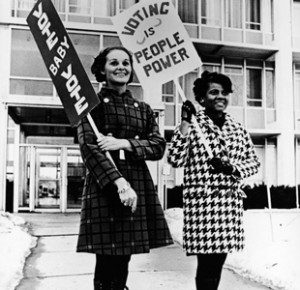
Despite what you may have heard, allowing people to vote on taxes and other laws is completely consistent with the “republican form of government.â€
There is an old, and bogus, claim that to the contrary: that the U.S. Constitution requires states to lock citizens out from direct lawmaking. The argument is that only a system in which the politicians decide everything is permitted by Article IV, Section 4 of the U.S. Constitution. In that clause, the United States guarantees to each state a “republican Form of Government.â€
Among those who have studied the issue, this argument has been discredited for some time. Yet it surfaced again recently when a group of plaintiffs, nearly all of them present or former government workers, sued to overturn Colorado’s Taxpayer Bill of Rights (TABOR). TABOR is the part of the state constitution that requires tax increases to be approved by the people. TABOR has been in effect since 1992, and its economic benefits for Colorado have been nothing short of astounding. Yet government insiders don’t like it, because they think it reduces their revenue, so they have attacked it again and again.
Colorado is not alone in allowing the people to vote directly on certain laws. In forty-nine states (all but Delaware) certain kinds of measures must be approved or rejected by the electorate. That system is called “referendum.â€Â In about half the states, the people may initiate and approve laws themselves. This is called “initiative.â€Â TABOR was added to the state constitution by initiative, and requires referenda on tax hikes. Although the plaintiffs say they “only†want to destroy TABOR, the theory in their legal complaint, if accepted, would destroy both initiatives and referenda nationwide.
The truth is that the Founders repeatedly recognized direct citizen lawmaking as consistent with republican government. As Founders such as Charles Pinckney and James Wilson said, in a republic laws are made either by representatives or by the people directly. In fact, most of the prior governments the Founders called “republics†required that the people approve ALL laws. Examples were the Roman Republic and ultra-democratic Athens, as well as more modern states, such as the cantons (provinces) in the Swiss Confederation. In America, some of the smaller states already made wide use of direct citizen lawmaking. Examples include the New England town meeting and referenda in Massachusetts and Rhode Island.
Dictionaries of the time also defined “republic†in ways that permitted direct voting on issues by the electorate.
The idea that popular tax votes are “unrepublican†is particularly bizarre. Tax revenue was seen as a gift from the people themselves. The people imposed taxes through representatives in the eighteenth century only because the large size of the country rendered assemblies of all citizens impractical. With modern technology, of course, regular referenda on taxes have become practical.
True, for a number of reasons the Founders did not provide for direct citizen lawmaking at the federal level. Just as the people checked their state legislatures, state legislatures were to do much of the job of checking Congress. Article V’s state application-and-convention process is the federal analogue to state-level initiative and referendum.
Moreover, the Founders made it clear that states could adopt any republican system they chose. The Constitution simply barred them from jettisoning the rule of law or setting up monarchies or dictatorships. For more information and direct quotations, see my 2002 Texas Law Review article on the subject or my entry on the Guarantee Clause in theHeritage Guide to the Constitution.

Get the New Book Today!
So where did the plaintiffs get the perverse idea that you can’t have direct citizen lawmaking in a republic?
The theory appears to be a product of what historians disparagingly call “law office legal history.†This is when lawyers advance one-sided historical claims they think will help them in court. The roots of the “republican form of government†claim go back to the 1840s, when each of two rival governments in Rhode Island was accusing the other of being “unrepublican.â€Â
Usually a passage from James Madison’s Federalist No. 10 is trotted out in support—read out of context and without necessary background knowledge. Those advancing this claim overlook that in Federalist No. 63, Madison himself cites several examples of republics with direct citizen lawmaking.
As if all this weren’t enough, the anti-TABOR suit was filed in defiance of a long-standing Supreme Court rule that whether a state is “republican†is a question for Congress, not the courts. But it illustrates the lengths to which some government insiders will go to take away from the people a treasured constitutional right.
In private life, Rob Natelson is a long-time conservative/free market activist, but professionally he is a constitutional scholar whose meticulous studies of the Constitution’s original meaning have been published or cited by many top law journals. (See http://constitution.i2i.org/about/.) Most recently, he co-authored The Origins of the Necessary and Proper Clause (Cambridge University Press) and The Original Constitution (Tenth Amendment Center). After a quarter of a century as Professor of Law at the University of Montana, he recently retired to work full time at Colorado’s Independence Institute. Visit his blog there at http://constitution.i2i.org/

- The Truth about the Much-Abused Commerce Clause - February 28, 2024
- The Meaning of “Regulate Commerce” to the Constitution’s Ratifiers: An Update - February 7, 2024
- Why It May be Impossible to Disqualify Trump from the Presidency - January 8, 2024